
Introduction
In an age where life feels increasingly fragmented, fast-paced, and digitally overwhelmed, people across cultures are rediscovering an ancient yet profoundly relevant practice: collective chanting. Whether it is mantra chanting in temples, group prayers, kirtans, or community meditation circles, chanting together has a unique power that goes far beyond individual practice.
The power of collective chanting lies not only in spiritual tradition but also in its emotional, psychological, social, and energetic impact. When voices unite in rhythm and intention, something remarkable happens—individual boundaries soften, minds synchronize, and a shared sense of peace emerges. This blog explores how collective chanting influences everyday life and why it remains a timeless tool for harmony and well-being.
What Is Collective Chanting?
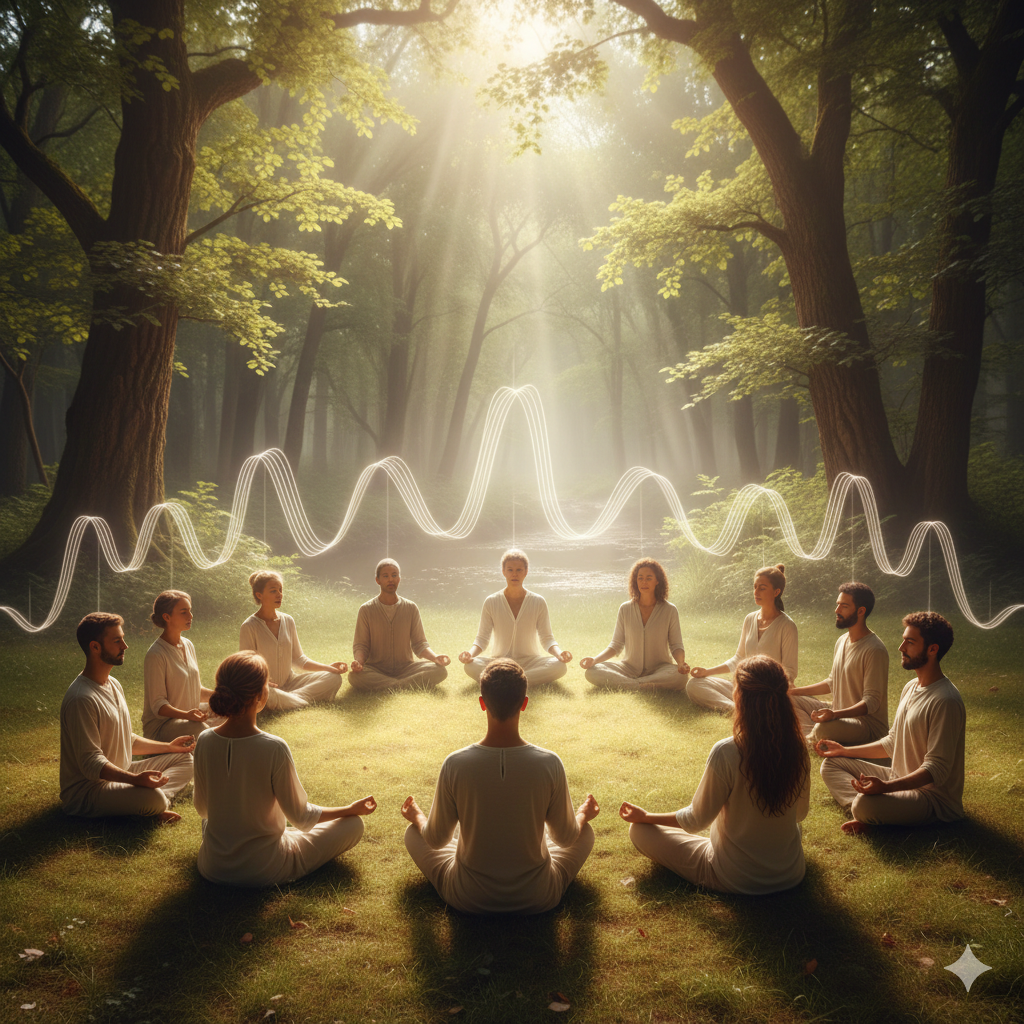
Collective chanting refers to a group of people chanting mantras, hymns, or sacred sounds together with a shared rhythm and intention. It may take place in temples, homes, meditation halls, yoga centers, or even public spaces.
Unlike solitary chanting, collective chanting creates a shared vibrational field. Each voice reinforces the others, amplifying both sound and intention. The result is a deeply immersive experience that touches individuals on mental, emotional, and spiritual levels simultaneously.
Ancient Roots of Group Chanting
Collective chanting has been practiced for thousands of years across civilizations:
Vedic traditions emphasized group recitation of mantras
Buddhist sanghas chant sutras together
Gregorian chants unified early Christian communities
Sufi zikr involves rhythmic group remembrance
These traditions understood a truth modern society is rediscovering: sound unites consciousness. Chanting together was never just ritual—it was a way to build harmony within individuals and communities.
The Science Behind Collective Chanting
Modern research helps explain why collective chanting feels so powerful. When people chant together:
Breathing patterns synchronize
Heart rhythms align
Brain waves shift toward calmer states
Stress hormones decrease
Group chanting often activates alpha and theta brain waves, associated with relaxation and creativity. This synchronization creates a sense of safety and belonging, allowing the nervous system to relax deeply.
The shared rhythm also stimulates the vagus nerve, improving emotional regulation and overall well-being.
Vibrational Energy and Shared Intention
Sound is vibration, and vibration influences matter—including the human body and mind. In collective chanting, sound waves overlap and intensify, creating a resonant field of energy.
When intention is added—peace, healing, devotion, or gratitude—the effect becomes even stronger. Many spiritual traditions believe that such collective vibrations extend beyond the group, positively influencing the surrounding environment.
This is why chanting is often performed for:
World peace
Healing
Protection
Community well-being
Emotional Healing Through Group Chanting
One of the most immediate benefits of collective chanting is emotional release. People often carry unexpressed stress, grief, or anxiety. Chanting together provides a safe and non-verbal outlet for these emotions.
Participants frequently experience:
A sense of lightness
Emotional clarity
Reduced loneliness
Renewed optimism
Being surrounded by voices chanting the same words creates reassurance: you are not alone. This shared experience fosters deep emotional healing.
Collective Chanting and Mental Clarity
In everyday life, the mind is constantly pulled in multiple directions. Collective chanting naturally anchors attention in the present moment.
The repetition of sound:
Reduces mental noise
Improves focus
Encourages mindfulness
Breaks cycles of overthinking
Because the group maintains rhythm, individuals find it easier to stay engaged compared to solo practice. The mind gently follows the collective flow.
Strengthening Social Bonds and Community
Collective chanting is a powerful social glue. It dissolves differences of age, status, language, and background. Everyone becomes part of the same rhythm, the same breath, the same intention.
This practice:
Builds trust and empathy
Encourages mutual respect
Creates a sense of belonging
Strengthens community identity
In a world struggling with disconnection, collective chanting reminds us of our shared humanity.
Spiritual Growth Through Shared Practice
From a spiritual perspective, collective chanting accelerates inner growth. The combined devotion and focus of a group often feels stronger than individual effort.
Many practitioners report:
Deeper meditative states
Heightened devotion
Stronger spiritual discipline
A sense of divine presence
Group chanting also supports beginners, making spiritual practices more accessible and less intimidating.
Impact on Daily Stress and Lifestyle Balance
Regular participation in collective chanting can significantly improve everyday life. Over time, practitioners often notice:
Better stress management
Improved sleep quality
Greater patience
Enhanced emotional resilience
The calm experienced during chanting gradually extends into daily activities—work, relationships, and decision-making. Life feels less reactive and more centered.
Collective Chanting in Modern Settings
Today, collective chanting has evolved beyond traditional spaces. It can be found in:
Yoga and wellness retreats
Corporate mindfulness programs
Online group chanting sessions
Community healing circles
Even virtual chanting, when done with shared timing and intention, can generate a sense of connection and calm.
The Role of Language and Sound
Interestingly, the power of collective chanting does not depend solely on understanding the language. Sanskrit mantras, for example, are valued for their phonetic precision and vibrational quality.
What matters most is:
Rhythm
Repetition
Intentional sound
This makes collective chanting universally accessible, regardless of linguistic or cultural background.
Chanting as a Tool for Collective Well-Being
Beyond individual benefits, collective chanting contributes to collective well-being. Many traditions believe that group chanting purifies the environment and promotes harmony in society.
This idea aligns with a growing awareness that inner peace and outer peace are interconnected. When individuals gather to cultivate calm and compassion, it naturally influences the larger social fabric.
Overcoming Hesitation and Self-Consciousness
Some people hesitate to join collective chanting due to self-consciousness or fear of doing it “wrong.” However, collective chanting is not about performance—it is about participation.
In fact:
Individual imperfections dissolve in group sound
Judgment fades quickly
Authentic expression is encouraged
The group carries you, allowing you to relax and simply be present.
Making Collective Chanting Part of Everyday Life
Incorporating collective chanting doesn’t require drastic changes. Simple ways include:
Weekly group chanting sessions
Family chanting at home
Community prayer gatherings
Online live chanting groups
Consistency matters more than duration. Even short, regular sessions can create lasting positive effects.
Why Collective Chanting Matters Today
Modern life emphasizes individuality, productivity, and speed. Collective chanting offers a counterbalance—a reminder to slow down, connect, and harmonize.
It addresses:
Emotional overload
Social isolation
Mental fatigue
Spiritual disconnection
By bringing people together in sound and intention, collective chanting becomes a powerful antidote to modern stress.
Conclusion: One Voice, Many Hearts
The power of collective chanting in everyday life lies in its simplicity and depth. It transforms sound into connection, repetition into peace, and togetherness into healing.
When voices unite, boundaries dissolve. The mind quiets, the heart opens, and a shared sense of harmony emerges. In chanting together, we remember something essential—that peace is not only a personal pursuit, but a collective experience.
In a world that often feels divided, collective chanting gently reminds us that one rhythm, one intention, and one shared breath can bring many hearts back into balance.